
Apr 30, 2025
How to Properly Ripen and Flush Cannabis
Cultivation
Techniques
Ripening Cannabis Properly
How to Flush, Finish, and Bring Out True Flavor
Cannabis cultivation is a labor of love and time, and it comes with real operating costs. Skipping a proper ripening phase can ruin an otherwise perfect run, wasting months of work, money, and potential.
Properly ripened flower carries a deeper aroma, cleaner flavor, better structure, and a more usable cannabinoid effect. Most importantly, it burns properly. You are tasting the plant, not leftover inputs.
Whether you run an ACMPR medical grow, a micro cultivation facility, or a standard operation, proper ripening is not optional. It is part of producing clean product that performs well in lab testing and in a customer’s hands.
Pistils and Why They Matter
Those “red hairs” on a cannabis flower are pistils, also called stigmas. Their biological role is reproduction. In nature, they catch pollen released by male plants.
In indoor cultivation we typically grow sensimilla, meaning no males, no seeds. But pistils still give us something valuable: a visual ripening signal that is often more reliable than a calendar.
Early in flower, pistils are usually white or pale. As the plant approaches maturity, they darken into amber or red hues depending on genetics.
When to Start Flushing
A simple and effective rule:
Start your flush when roughly 60% to 75% of pistils have darkened.
Read the plant, not the breeder calendar.
Breeder timelines are averages based on specific conditions. Your room variables change finish time dramatically:
light intensity and spectrum
CO2 levels
VPD and temperature strategy
nutrient program and EC
cultivar expression and phenotype variation
stress events, pests, drybacks, and recovery time
The most consistent craft approach is watching the plant’s ripening signals, then confirming with trichomes.
What the Flushing Phase Really Does
Flushing is not just “washing nutrients out.” It is a ripening window where the plant transitions into its final expression.
During a proper finish:
fan leaves yellow as the plant mobilizes stored reserves
calyxes swell and tighten
aroma shifts from sharp and green to deeper and more defined
resin production and texture often improve
the flower burns cleaner and cures better
A typical flush is 14 to 28 days, depending on cultivar, growing style, and how aggressively the plant was fed earlier in flower.
A clean, patient finish can take a good crop and turn it into a great one.
Going One Step Deeper: Trichomes
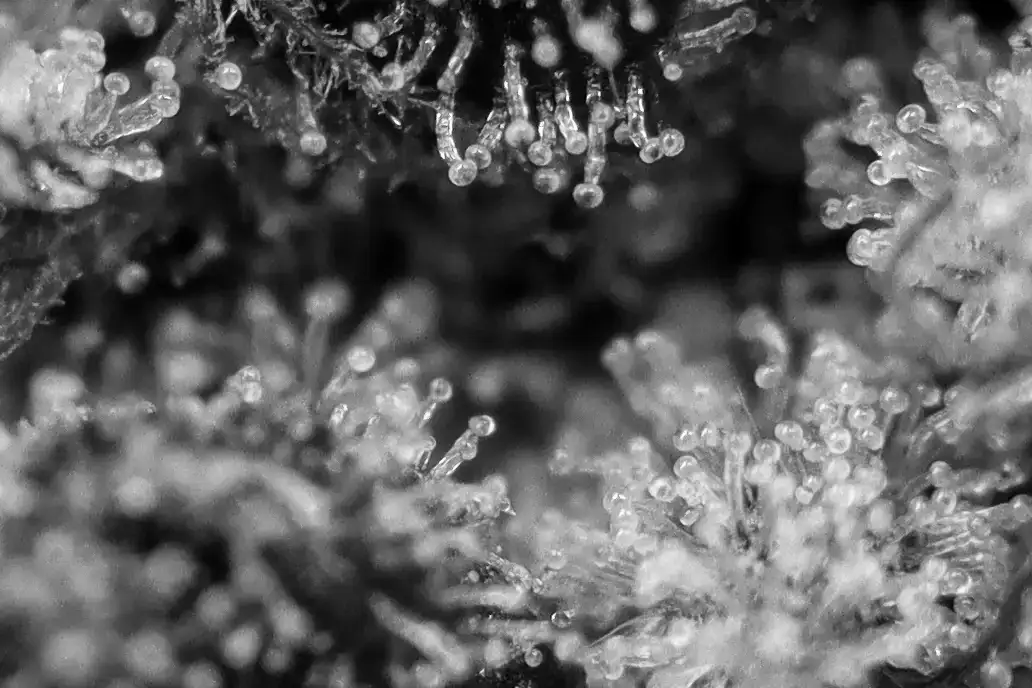
If pistils are your first signal, trichomes are your confirmation.
A simple phone camera with good zoom can work, but a small handheld scope makes it easier. Watch the trichome heads:
Clear is immature
Cloudy or milky is peak resin maturity for many cultivars
Amber indicates further degradation and shift in effect
Dark amber and collapsing heads means you are pushing past prime
Many growers aim for a blend, but the real target depends on the cultivar and your desired effect. Just do not let the trichomes “die off” because you waited too long.
Flushing Technique: How to Actually Do It
The flushing phase is not the same as your normal watering schedule.
Drain to waste systems
Soil, coco, and rockwool drain to waste require more volume and more frequent runoff.
increase flush irrigation volume and frequency
aim for meaningful runoff
never let runoff sit in trays or saucers
keep the root zone clean through the entire ripening window
A simple way to think of it:
Drain to waste flush feeds: about triple your normal approach.
Recirculating hydroponics
Recirculating systems flush differently. You are not chasing runoff, you are managing solution quality.
dump and refill more often
keep the system clean, sterile, and stable
do not allow old solution to linger during ripening
A simple rule:
Increase dump and refill frequency by about three times during the flush window.
pH and Additives During Flush
During a true flush, keep it simple.
Clean water, minimal additives, and low PPM is the direction. The goal is not to introduce new inputs. If you are trying to finish clean, avoid unnecessary additions that push EC back up.
Every grow style is different, but the end goal is the same:
clean feed, clean root zone, clean burn.
Environment: The Missing Half of Ripening
Ripening is not just what goes into the plant. It is what the room does to the plant.
When you begin flush, your environment should begin shifting toward a fall style finish.
Light intensity
When pistils hit that 60% to 75% mark, many rooms benefit from dropping intensity.
Lower light intensity to roughly 40% to 50% of peak when starting flush.
This helps the plant harden and finish without pushing excessive new growth.
CO2
CO2 is a growth accelerator. During ripening, you are no longer trying to drive vegetative expansion.
Cut CO2 enrichment when starting flush.
Temperature
A gradual temperature drop supports finishing and can help drive color expression.
Drop room temperature by about 6 to 8°C over the first week of flush.
Do it gradually, not as a shock.
Advanced Ripening: Color, Terps, and Controlled Stress
Those deep purples and blues many growers chase come from anthocyanins, pigments that express more strongly under cooler conditions and specific genetics.
Cold finishing can also influence terp expression and resin behavior. The key is controlled stress, not chaos.
Cold root zone and water chilling
Chilling the root zone can be used late in flower to create a final push in aroma and resin.
lower chiller setpoints carefully
keep dissolved oxygen high
avoid root shock that stalls the plant
cold stress should be applied late, not early
The plant builds cannabinoids and terps partly as a defensive response. A clean, controlled stress at the end can add that final “pop” when done right.
The “Armageddon” Finish
Final 48 Hours
This is a dramatic technique and it is not for every cultivar, but it can create a memorable finish when used intentionally.
For the final 48 hours:
keep the room completely dark
drop temperature as low as safely possible
harvest carefully because cold trichomes are more brittle
This method can be especially useful if you harvested the top canopy first and want to push the inside and lower canopy to sugar up and finish strong.
Only run this in the final 48 hours. Longer is not better.
Let’s Chat Plants
Ripening is one of the biggest separators between average flower and truly dialed craft. The best part is that once you understand the signals, it becomes repeatable.
At 4trees we love this stuff. If you want help dialing a finish strategy for your specific cultivar, grow style, and facility setup, book a free Zoom call and we will walk through it with you.
These techniques are built from decades of real grow room experience. When you do good, we do good.