
Jan 8, 2026
Cannabis HVAC Design 2026: The Cost of Dehumidification
HVAC
Grow Room Design
Planning
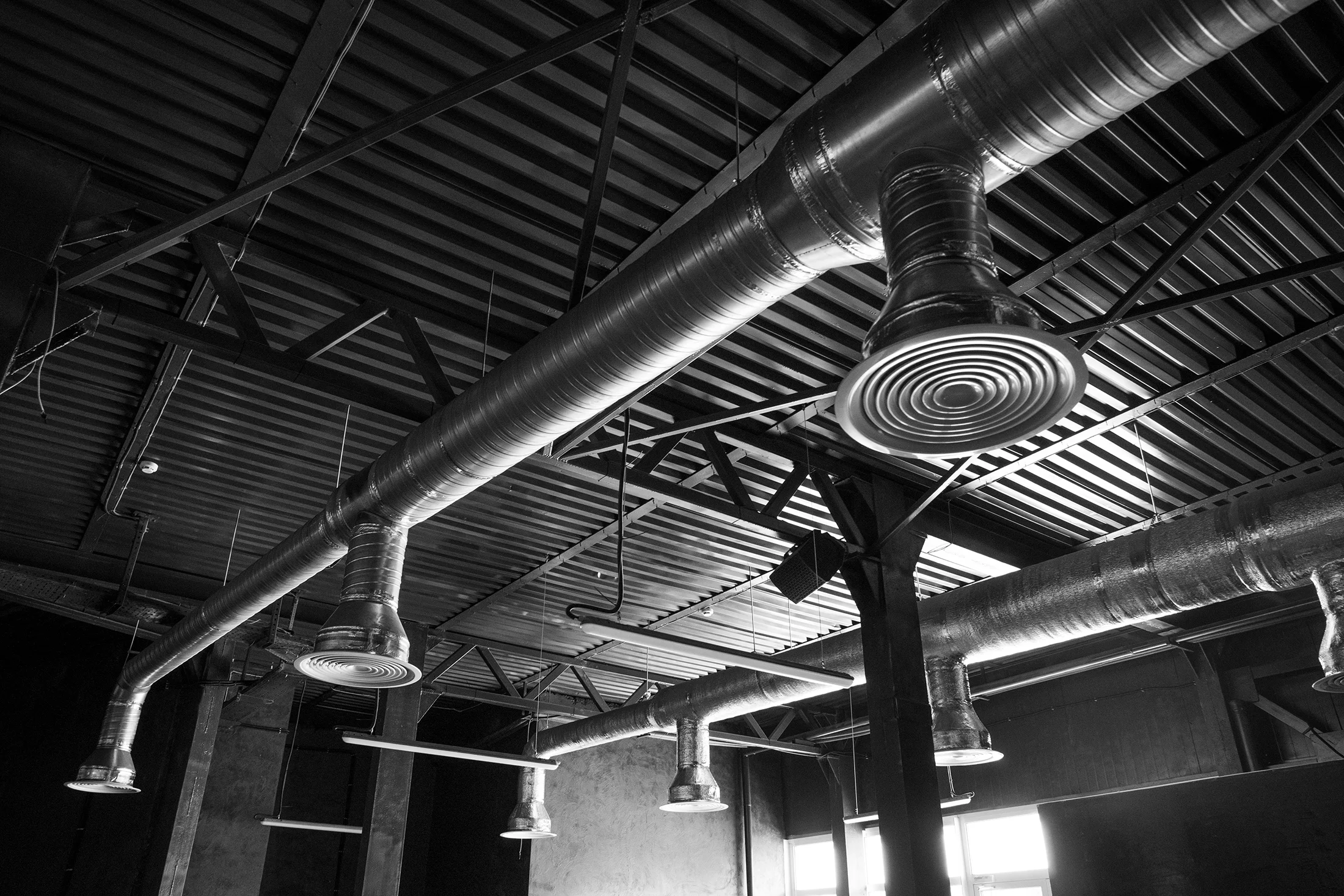
The Cost of HVAC
How to design for dehumidification and energy efficiency
In cannabis, HVAC is not just comfort conditioning. It is the backbone of yield, quality, compliance, and operating margin. Most cultivation facilities do not struggle because their rooms are too hot. They struggle because their rooms are too wet.
Plants transpire large amounts of moisture into the air, and in sealed or semi sealed rooms that water has to be removed mechanically. Best practice guides and engineering literature consistently highlight that in cultivation spaces, latent load is the driving force and must be treated differently than conventional building HVAC design. Resource Innovation Institute+2ASHRAE+2
This article breaks down what is actually happening, how to calculate your moisture load, and how to design systems that keep quality high while controlling energy cost.
Why dehumidification is the real cost driver
1) Your plants are moisture generators
In cultivation, latent load comes primarily from evapotranspiration. In plain terms, your irrigation becomes humidity. Resource Innovation Institute+1
A simple, widely used reality check is this: in a sealed room, most of the water you feed ends up back in the air and has to be removed by your dehumidification strategy. Quest Climate+1
2) Plants also act like evaporative coolers
One of the most common sizing mistakes is treating grow rooms like office buildings and stacking loads incorrectly. ASHRAE has pointed out that designers often forget plants cool the air through evapotranspiration, which changes how sensible load should be calculated and how equipment should be selected. ASHRAE+1
3) Dehumidification can silently inflate electrical cost
If the room needs drying, and the system is not designed to dehumidify efficiently, you end up doing expensive work twice: cooling, then reheating, or running equipment outside its efficient range. Industry best practice guidance emphasizes selecting strategies that specifically address high latent loads rather than relying on comfort cooling alone. Resource Innovation Institute+1
The basic physics that explains everything
VPD controls transpiration, and transpiration drives latent load
Vapor Pressure Deficit is a practical way to describe how strongly the air pulls moisture from the plant. It influences stomata behavior, transpiration, and nutrient movement. Cannabis Science and Technology+1
If VPD is too low, the room is too humid for the leaf temperature and transpiration slows. If VPD is too high, plants can over transpire, stress, and become harder to steer. Desert Aire notes target VPD ranges are commonly discussed around 0.5 to 1.5 kPa depending on growth stage, and engineers can use VPD as a design metric tied directly to HVAC control. Desert Aire
Lights out still transpires
Moisture does not stop instantly when lights go off. ASHRAE grow room materials note transpiration continues and ramps down over time, roughly around a fraction of full light moisture rate after full dark. pugetsoundashrae.org
This matters because many facilities undersize drying capacity by only considering lights on conditions.
How to calculate your dehumidification load
There are many ways to model a room, but one simple approach is good for early planning:
Step 1: Start with irrigation water
Track the maximum daily irrigation volume at peak flowering.
Step 2: Estimate how much becomes humidity
In many sealed room discussions, growers use the concept that plants transpire nearly all water they absorb, with some portion going to drain. That remaining portion is what the HVAC must remove from the air. Quest Climate+1
Step 3: Convert to pounds per day
1 gallon of water is about 8.34 pounds. Neocision Grow Lights
So if 95 gallons end up in the air, that is roughly 792 pounds of water per day.
Step 4: Convert to pounds per hour
Divide by 24.
Example: 792 lb per day becomes 33 lb per hour. Neocision Grow Lights
Step 5: Add a buffer
Many operators add a safety factor to account for variability, extra moisture sources, and imperfect assumptions. nextbigcrop.com+1
Step 6: Convert to pints per day when shopping equipment
Dehumidifiers are often rated in pints per day. A common conversion used in grow dehumidifier sizing is that 1 gallon equals 8 pints, and many growers translate daily water to pints per day to estimate required capacity. Quest Climate+1
Important note: dehumidifier ratings vary dramatically by condition, so you must look at performance curves, not just the headline number. Quest Climate
The hidden HVAC mistake that costs the most money
Selecting dehumidification based on a single rating point
Equipment performance changes with temperature and humidity. If your dehumidifiers are rated at conditions you never run, your real capacity can be far lower than expected. Quest and other manufacturers publish performance curves specifically because conditions matter. Quest Climate
This is one of the most common reasons facilities end up with:
humidity spikes late flower
mold pressure
unstable VPD
increased HVAC runtime
higher energy bills than modeled
What drives your moisture load the most
1) Irrigation rate at peak flower
This is the biggest lever. Desert Aire includes examples of operating cost comparisons tied to canopy area and watering rate, because watering rate heavily influences latent load and annual energy cost. Desert Aire
2) Lighting intensity and photoperiod
More light generally increases transpiration demand because the plant is driving more photosynthesis and water movement. That pushes latent load up and can change your ideal VPD targets.
3) Plant density and canopy development stage
A fully developed canopy behaves nothing like week two flower. Latent load ramps hard during late flower.
4) CO2 strategy and air exchange rate
A sealed room CO2 strategy often reduces outdoor air exchange, which increases the need for mechanical moisture removal rather than dilution.
Designing for energy efficiency without sacrificing crop steering
Energy efficient does not mean weak HVAC. It means picking the right architecture so the system does less wasted work.
Strategy 1: Treat latent and sensible as separate problems
Cannabis rooms are not offices. Engineering sources stress that latent load dominates and must be handled deliberately. Resource Innovation Institute+1
Practical implication:
choose equipment and controls that can dehumidify without excessive overcooling and reheat
avoid systems that only dry effectively when the room is too cold
Strategy 2: Right size dehumidification for peak conditions
If you size for average, you fail at peak flower. Peak flower is where quality is won or lost.
A good early design deliverable is a clear latent load sheet that shows:
peak irrigation assumptions
expected water to air conversion
required pounds per hour removal
safety factor
equipment capacity at actual operating conditions Quest Climate+1
Strategy 3: Use VPD as a control target
Desert Aire notes VPD can be used as a metric that ties grower intent to engineering control strategy. Desert Aire
When VPD becomes the target, HVAC design gets simpler:
humidity setpoints are no longer arbitrary
temperature and RH work together instead of fighting each other
plant steering becomes more repeatable across rooms and seasons
Strategy 4: Plan for lights out moisture and ramp down
ASHRAE grow room notes on lights out behavior support what operators see: humidity does not instantly drop into a stable state. pugetsoundashrae.org
Design implication:
control sequences should anticipate lights out and manage humidity transitions smoothly
do not undersize because you assumed moisture stops at lights off
Strategy 5: Build for part load efficiency and serviceability
The cheapest energy is the energy you never have to spend, but the next best is running equipment in its efficient range. Best practice guides recommend evaluating system controls strategies and the real performance of chosen equipment for cultivation loads. Resource Innovation Institute+1
Avoid designs that:
short cycle constantly
depend on extreme reheat
are difficult to service, causing downtime risk
A realistic example calculation
Imagine a flower room where peak irrigation is 120 gallons per day, and 15 gallons go to drain and waste.
Water to remove from air: 105 gallons per day
Convert to pounds: 105 × 8.34 = 875.7 lb per day Neocision Grow Lights
Per hour: 875.7 ÷ 24 = 36.5 lb per hour
Add a buffer factor for planning and variability
That pounds per hour number is what your dehumidification strategy must reliably remove while maintaining your target temperature and VPD.
The checklist that saves projects
Facility design phase
Define canopy and room schedule, including harvest rhythm
Estimate peak irrigation per room and total facility
Model latent load as the primary sizing driver Resource Innovation Institute+1
Select equipment based on performance at your real operating conditions Quest Climate
Confirm airflow distribution and avoid stagnant canopy corners
Operations and SOP phase
Log irrigation volumes and track humidity response
Set targets using VPD logic, not just RH Desert Aire+1
Build lights out ramp sequences into climate SOPs pugetsoundashrae.org
Maintain filters, coils, drains, and sanitation schedules
Plan redundancy for critical rooms to prevent crop loss
The bottom line
In cannabis cultivation, HVAC is your largest controllable operating cost and your strongest quality lever. The most profitable facilities do not chase the cheapest equipment. They design for the real load, which is moisture, then control it intelligently through VPD, sequencing, and right sized dehumidification. Engineering and best practice sources consistently emphasize that cultivation spaces are latent driven and should not be sized like conventional buildings. Resource Innovation Institute+2ASHRAE+2
A facility that is engineered around dehumidification is easier to run, easier to staff, easier to scale, and far more consistent in flower quality.
If you want, this article can be paired with a simple downloadable worksheet for calculating pounds per hour and pints per day per room using your irrigation and canopy numbers.
How 4trees Helps: Front Line HVAC Math, Built Into Your Facility From Day One
At 4trees Cannabis Building, this is not theory to us. We have been on the front line of cultivation facility planning since the early days of regulated cannabis, and one of the biggest reasons projects succeed or struggle comes down to the same thing every time: the math behind the rooms.
HVAC and dehumidification are where that math becomes real. Anyone can hang lights and build walls. What separates a professional facility from an expensive headache is whether the room was engineered around the actual loads the plants create, especially moisture.
When we plan and engineer facilities, we do not guess. We build your mechanical strategy around real world cultivation variables like:
Irrigation and runoff assumptions by room and growth phase
Peak flowering latent loads and dehumidification requirements
Lighting intensity, photoperiod, and plant density effects on transpiration
Harvest rhythm planning so your rooms run like an operation, not a scramble
Equipment selection that fits your goals and avoids wasteful overcool and reheat
Future proofing for expansion so you are not rebuilding later
This is the difference between a room that is always fighting humidity, and a room that holds stable VPD targets and produces consistent craft quality without the team constantly chasing readings.
4trees has helped develop and optimize large volumes of indoor cultivation space across Canada and beyond, and that experience shows up in the details. We design environments that are meant to be run daily by real teams, not just to look good on paper.
If you are planning a new facility, upgrading an existing site, or trying to fix an HVAC system that is costing too much and still not holding humidity, 4trees can step in with a clear plan. From construction ready drawings and equipment lists to grow room analytics, SOP integration, and remote consulting, we help you get the numbers right so the plants do what they are supposed to do.